
EV charging · 1 November 2026 · 5 min read
EV, home battery and free power: getting them to work together
When to charge the car from free midday power, when from cheap overnight power, and why a home battery usually should not empty itself into an EV.
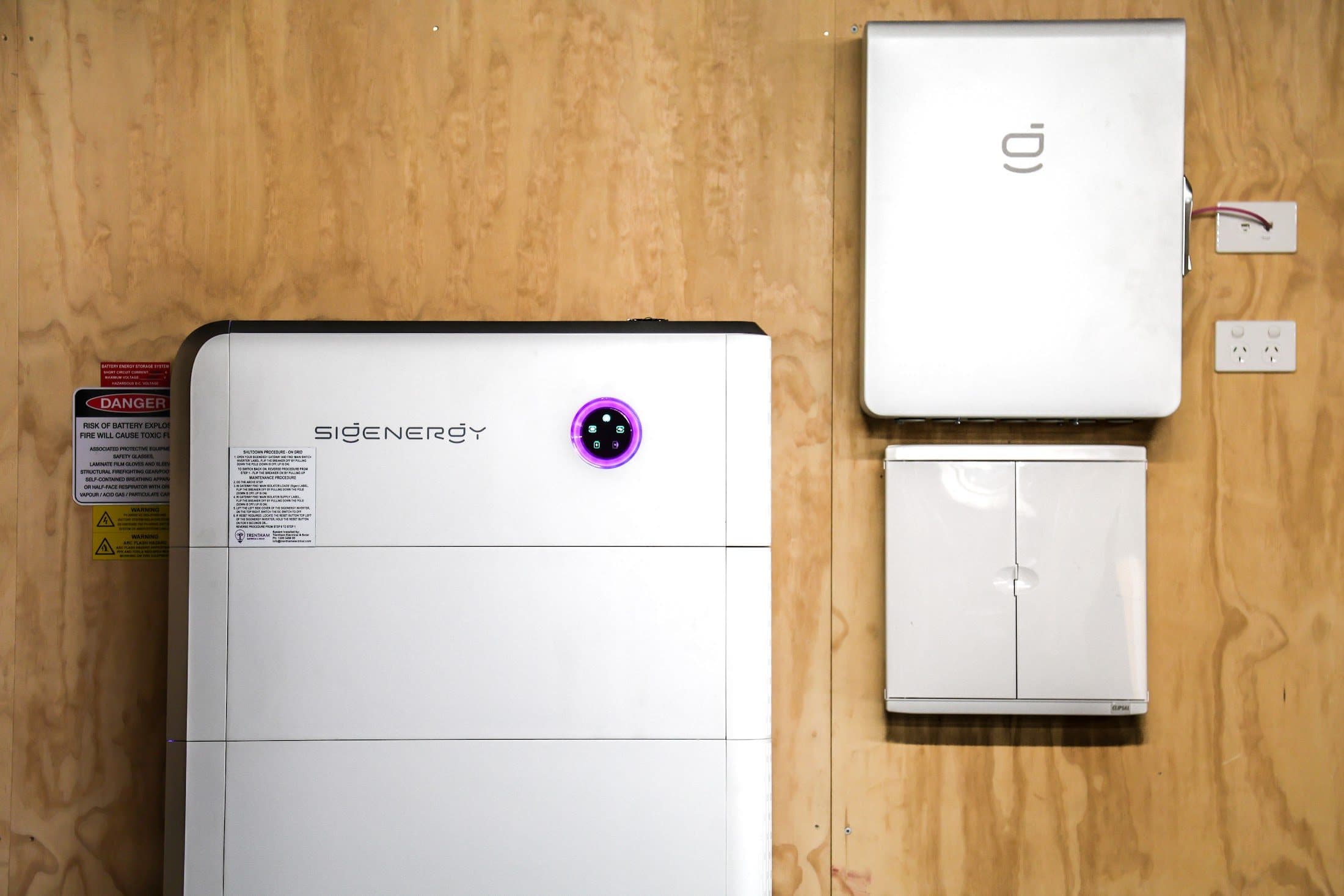
An electric car, a home battery and a plan with free midday power can work well together, or fight each other, with the battery pouring its evening energy into the car. The difference is mostly in the settings.
Each part has a different job
The home battery is there to carry the house through the evening. On the Midday Power Saver, the Essential Services Commission's peak period runs from 4pm to 9pm, and that is exactly when a battery earns its place.
The car is a big, patient load. energy.gov.au notes that an average day's driving of about 33 km typically uses no more than 10% of an EV's battery. It does not need charging every night, or at any particular hour.
The power plan decides when energy is cheap.
Free power in the middle of the day
From 1 October 2026, licensed retailers with 1,000 or more Victorian residential customers must offer the Midday Power Saver to customers with a smart meter. Households opt in, and electricity used between 11am and 2pm every day is free. Outside that window the commission's published rates have a solar soak period from 2pm to 4pm, off-peak from 9pm to 11am, and the 4pm to 9pm peak, with prices varying by distribution zone.
The commission is careful to say the offer is designed for households that can move their use into the middle of the day, and that it will not be the best offer for everyone. A car and a battery are two of the biggest loads a household can move, which is why they are worth thinking about together. There is a fair use cap of 24 kWh a day in the free window: use above that is charged, at no more than the plan's daytime solar soak rate, so a big battery and a car charging in the same three hours can run past it.
If the car is home at midday, charge it in the free window. If not, the battery can fill in those hours, ready for the evening.
Overnight charging
Plenty of cars are only home at night. That is fine. On the commission's published Midday Power Saver rates, off-peak power costs well under the 4pm to 9pm peak rate, and a 7 kW charger can put a few days of average commuting back into the car in a few hours.
The thing to watch is what the home battery is doing while the car charges. Unless it is told otherwise, a battery sees a large load in the house and covers it, because that is its job. A car plugged in at 6pm can drain a home battery quickly: a 7 kW charger running for an hour draws 7 kWh, and the house still needs its evening power after that.
Why the battery usually should not empty into the car
- Timing. The energy in a home battery is worth most during the evening peak. The car can usually wait until off-peak, or until tomorrow's sun.
- Size. A car's battery is usually far bigger than a home battery. A car can take everything a home battery holds and still want more, leaving the house buying peak power for the rest of the night.
- Losses. Every time energy goes into a battery and comes back out, some is lost. Moving solar into the home battery and then into the car pays that cost twice, where charging the car directly from the panels or from cheap grid power pays it once.
There are exceptions, such as a battery that is already full late in the afternoon with sun still on the panels. The point is that it should be a decision you set, not a default.
Setting it up
- Use the charger's solar mode. myenergi, for example, publishes guides for using its zappi with Sigenergy and GoodWe batteries so the car charges from solar without draining the home battery. Its approach uses the solar-only ECO+ mode with the minimum green level set to 100%, so the charger only runs on genuinely spare solar. Fronius's Wattpilot app lets you set battery thresholds for the same purpose.
- Tell the battery to leave the charger alone. Depending on the system, that can be a setting that excludes the charger from what the battery covers, a schedule, or a reserve level. Ask your installer to set it and to show you where it lives in the app.
- Schedule the grid charge. If the car charges from the grid, set the charger to start in the off-peak or free window, not the moment you plug in.
- Let the battery fill when power is cheapest. On a plan with free midday power, ask whether your battery can be set to top up from the grid in that window on days the panels fall short.
On bidirectional charging, where the car powers the house, energy.gov.au warns that you need to check with the car's maker first, as unauthorised use can affect the car's warranty.
Picking the plan
The right plan depends on when your household actually uses power, and whether your car and battery can move into the cheap hours. Our plan finder ranks every Victorian power plan against your own bill, so you can compare a free midday plan with a standard time of use plan on your numbers rather than an average.
If you are still choosing a battery, our home batteries page explains what a battery does for a solar home. The federal government's battery certificates also reduce the price of a battery: for systems installed from May to December 2026, the Clean Energy Regulator's factor is 6.8 certificates per kWh of usable capacity, tapering for batteries above 14 kWh, and it steps down again from January 2027.
The simplest way to see how a car, a battery and panels fit together on your house is to lay the panels out on your own roof and add a battery, then set the plan to suit.