
EV charging · 1 November 2026 · 5 min read
Choosing a home EV charger: cable, 7 kW or three phase?
The difference between charging from a power point and a wall charger, what single and three phase supply allow, solar modes, and what a licensed electrician needs to check before the install.
energy.gov.au puts home charging at around 80% of all reported EV charging in Australia, so the charger at your house matters more than any public network. The choice is simpler than it looks once you know what your car, your switchboard and your supply will take.
Option one: the cable that came with the car
Most EVs come with a portable cable that plugs into an ordinary power point. This is Level 1 or trickle charging, sometimes called a granny cable. energy.gov.au notes a standard power point delivers at most 2.4 kW, and a full charge from flat can take up to 24 hours.
That sounds slow, but think about how you use the car. The same site notes that the average Australian drives about 33 km a day, which typically uses no more than 10% of an EV's battery. Plugged in overnight, a power point can put back far more than that.
A cable is a fair place to start if:
- your daily driving is modest,
- the car sits at home for long stretches, and
- you have a power point near where you park.
Two cautions. Plug the cable straight into the wall, never into an extension lead or power board, as energy.gov.au advises. And have an electrician check the circuit: a car drawing power for ten hours straight is a very different load from a kettle.
Option two: a wall charger
A dedicated home charger, Level 2, is wired into your switchboard on its own circuit. energy.gov.au gives home chargers a range of 7 to 22 kW, typically three to ten times faster than a power point, adding somewhere between 30 and 80 km of range for each hour of charging.
Which end of that range you can use depends on two things: your supply and your car.
Single phase or three phase supply
Many homes have a single phase supply. On single phase, a wall charger tops out at about 7 kW. myenergi, for example, rates its single phase zappi at roughly 7.4 kW at 32 amps.
Homes with a three phase supply can run an 11 kW or 22 kW charger, because the load is spread across three phases. If you are not sure which you have, an electrician can tell you in a minute by looking at your main switch and meter.
What your car will accept
The car decides how much AC power it will take, not the wall. energy.gov.au notes that a Type 2 connection can carry up to 22 kW, but some EVs will only accept 11 kW AC. A 22 kW charger on a car that only accepts 11 kW simply charges at 11 kW. Check your owner's manual before paying for capacity the car cannot use.
Do you need the fastest one?
Usually not. A 7 kW charger running overnight puts many days of average commuting back into the car. Faster charging mainly helps if you drive long distances most days, or if two cars share one charger and one short window.
What your switchboard and supply allow
This is where a site check earns its keep. energy.gov.au is plain that a dedicated charger must be installed by a licensed electrician and that it may need a switchboard and supply upgrade. Things the electrician will look at:
- The switchboard: whether there is room for a new circuit and protection, and whether an older board needs replacing.
- The main supply: how much spare capacity there is once the house's other big loads (heating, cooling, hot water, cooking) are counted. A smart charger with load management can turn itself down when the house is busy.
- The cable run: distance from the board to where you park, and how the cable gets there.
- The network: some networks want to know about an EV charger before it goes in. CitiPower and Powercor, for example, list EV chargers among the connections lodged through their customer portal, and your electrician can handle that. Moving from single to three phase is a change to your connection that the network has to approve and carry out.
Smart and solar modes
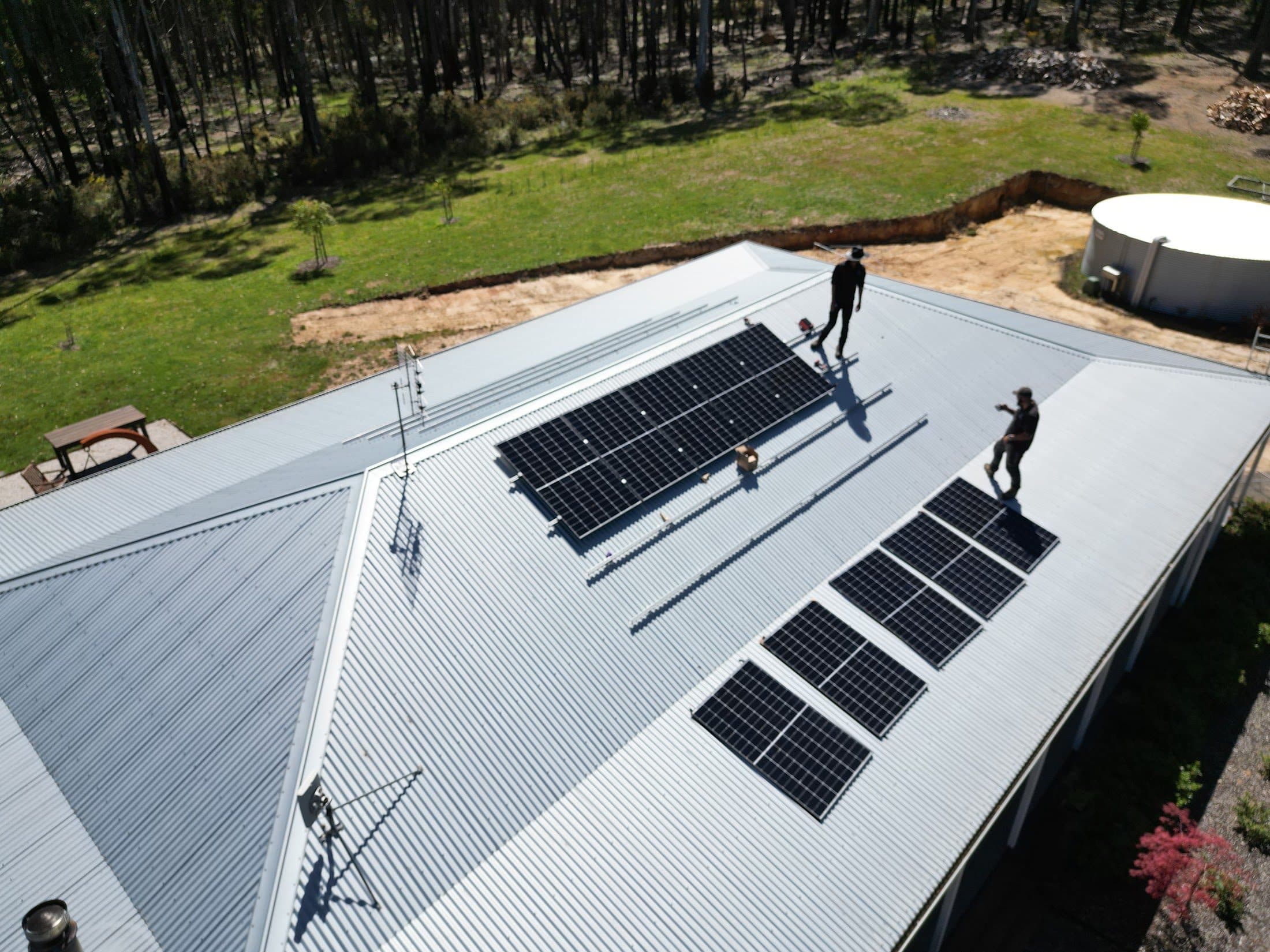
If you have solar panels, or plan to, the charger's software matters as much as its kilowatts. A solar-aware charger uses a meter clamp on your incoming supply to see how much solar is spare, and charges with that.
- myenergi's zappi offers ECO+ (surplus solar only), ECO (solar topped up from the grid so the charge does not stop) and FAST.
- Fronius's Wattpilot offers an Eco mode that charges on spare solar or cheap grid power, and a Next Trip mode that makes sure the car has the charge you need by the time you leave. It can switch between one and three phase on its own to follow the solar.
Smart scheduling is useful even without solar. energy.gov.au points out that a smart charger can be set to charge when electricity is cheapest, so you can set it once and stop thinking about it.
A note on small amounts of solar: the EV charging standard does not allow charging below about 1.4 kW on single phase, so a solar-only mode waits until at least that much is spare.
The installation itself
In Victoria, all electrical work must be done by a licensed electrician, and paid work must be done by or for a registered electrical contractor. Energy Safe Victoria requires a Certificate of Electrical Safety for all electrical installation work. Ask for yours and keep it with the charger's paperwork.
A good install also leaves the charger on your Wi-Fi and in its app, with the solar mode tested if you have panels.
If a new charger is part of a bigger plan, it pays to design the solar and the charger together so the panel count suits the car. Start with your own roof here and see what fits.