
Free power · 1 November 2026 · 5 min read
Charging a home battery from free power
A home battery can top up from the grid during a free power window and run the house through the evening peak. How it works, why the daily cap matters, and the settings to ask about.
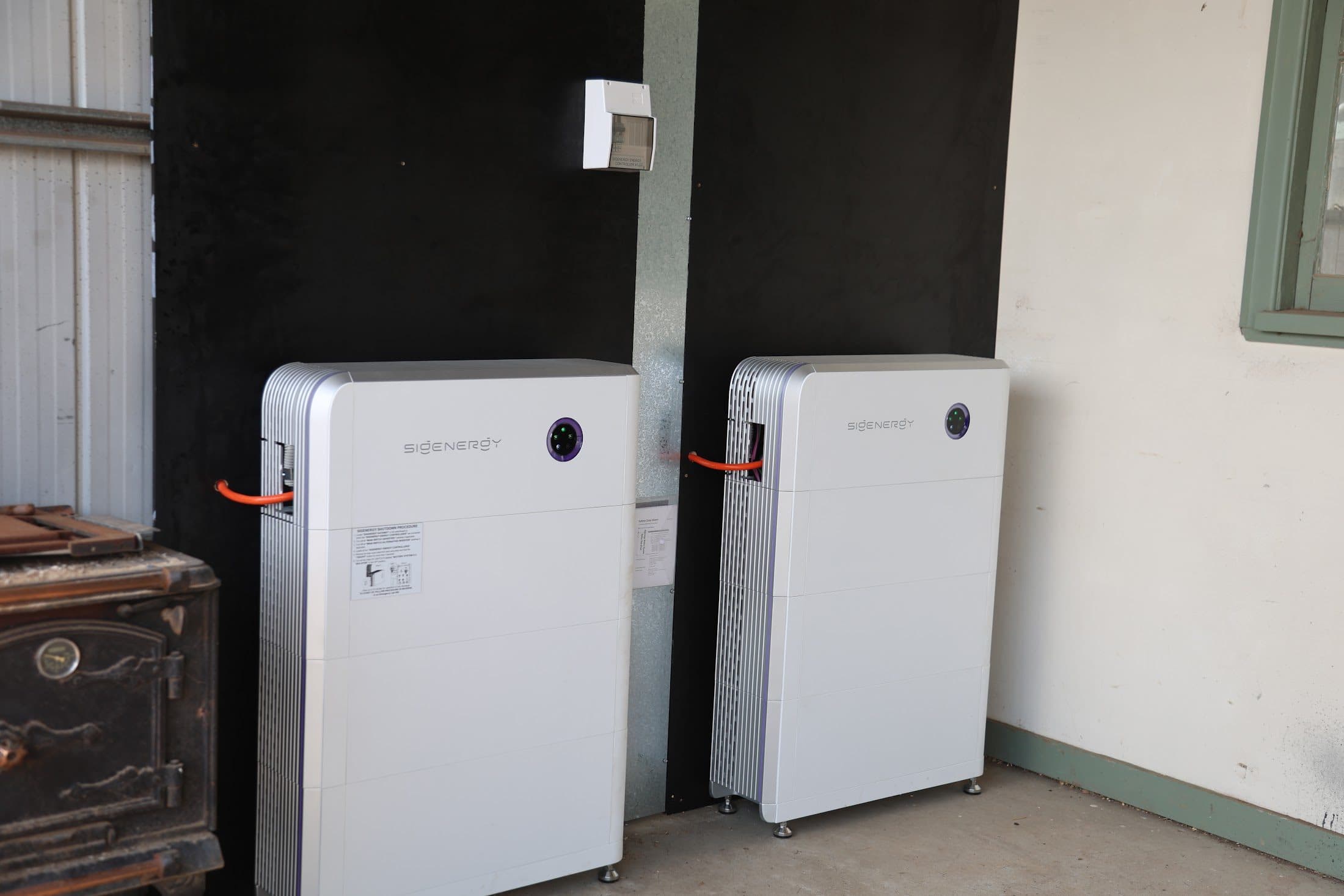
Free midday power and a home battery fit together naturally. The free window falls in the middle of the day, when the grid has plenty of cheap solar, and the most expensive power falls in the evening. A battery is the thing that moves energy from one to the other. The Victorian Government's own guidance on the Midday Power Saver suggests exactly this for battery owners: charge in the free window on days when your solar is low, and use the stored energy in the evening.
Here is how it works in practice, and what to check before you rely on it.
How a battery uses a free window
Most hybrid batteries can charge from two sources: your solar panels and the grid. On a free power plan, you set the battery to allow charging from the grid during the free hours. During that window, any shortfall between what your panels produce and what the battery and house need is drawn from the grid at no charge, up to the plan's limit. After the window closes, the battery runs the house through the late afternoon and evening.
On a sunny day your panels may fill the battery by themselves, so the free window adds little. The free window earns its place on cloudy days and in winter, when solar alone may leave the battery half empty going into the evening.
Why the daily cap matters for a big battery
Every free power plan we have looked at in Victoria limits the free energy in some way, and everything in the house during the window counts towards it: the battery, the hot water, the washing, the air conditioner.
At the time of writing (November 2026):
- The Midday Power Saver gives up to 24 kWh free between 11am and 2pm. Above that you pay, at no more than the plan's solar soak rate.
- Flow Power 4Free allows up to 8 kWh in each hour from 11am to 3pm, so up to 32 kWh a day, but no more than 8 kWh in any single hour.
- OVO Free 4 runs 11am to 3pm under a fair use policy that treats routine use over 24 kWh a day as outside fair use.
- GloBird ZEROHERO, a plan for battery households, offers free charging from 12pm to 3pm for customers who joined from 1 July 2026, limited to 50 kWh per day.
Now think about a large battery on a dull winter day. If it starts the window nearly empty and holds, say, 30 kWh, it alone could want more than a 24 kWh cap allows, before anything else in the house is counted. A smaller battery, or a plan with a larger allowance, avoids that problem. This is why the cap and the battery size have to be looked at together. There is more on comparing caps in our guide to free power plans with daily caps.
Charge power and the length of the window
The other limit is time. A battery can only charge as fast as its inverter and battery allow. Over a three hour window, a battery charging at 5 kW can take in about 15 kWh. At 10 kW it could take in about 30 kWh, which would run straight past a 24 kWh cap and, on an hourly capped plan, past an 8 kWh hourly limit too.
So the settings matter as much as the hardware. Charging a little slower across the whole window can keep you inside the limits and also leaves room for the house.
Settings to ask about
When you set up a battery on a free power plan, or ask your installer to, these are the things to cover:
- Grid charging allowed, and only during the free hours. Outside the window, grid charging should usually be off.
- The exact window. Make sure the battery schedule matches your plan, including whether it is 11am to 2pm, 11am to 3pm or 12pm to 3pm. Some plans changed their hours for new customers in 2026.
- A charge power limit, so the battery stays inside a daily or hourly cap with room for household loads.
- A target charge level. You may not want to fill to 100% from the grid every day, particularly in summer, when solar will do it for free anyway.
- Discharge timing. Set the battery to run the house through the evening peak (on the Midday Power Saver that is 4pm to 9pm), rather than emptying itself in the afternoon.
- Exports. Some plans pay a higher rate for energy exported in the evening. If you are on one of those, ask whether your battery should export some energy in that window, and how much to keep for the house overnight.
- Retailer control. On virtual power plant plans, the retailer may sometimes adjust or pause charging.
Time of use still applies
A free window sits inside time-of-use pricing. The Midday Power Saver has four periods: off peak from 9pm to 11am, free from 11am to 2pm, solar soak from 2pm to 4pm, and peak from 4pm to 9pm. The battery's job is to fill up when power is free or cheap and keep you off the grid in the peak.
A safety note
Batteries and EV chargers are among the biggest loads in a home. The Victorian Government recommends spreading them across the free window rather than running them together, and talking to a licensed electrician if your switchboard or wiring is older. We install batteries with licensed electricians, and setting the charge schedule properly is part of the job.
Next steps
Read more about how batteries work, sizes and brands on our home batteries page. Then upload a power bill to the Energy Plan Finder to see how each Victorian plan, free power plans included, would suit your usage with a battery. The finder takes no commission and we get nothing from any energy retailer.