

Free power · 1 November 2026 · 4 min read
Feed-in tariffs in Victoria in 2026, what changed
Victoria no longer has a regulated minimum feed-in tariff. Retailers now set their own, many pay more in the evening than at midday, and using your own solar is worth far more than exporting it.
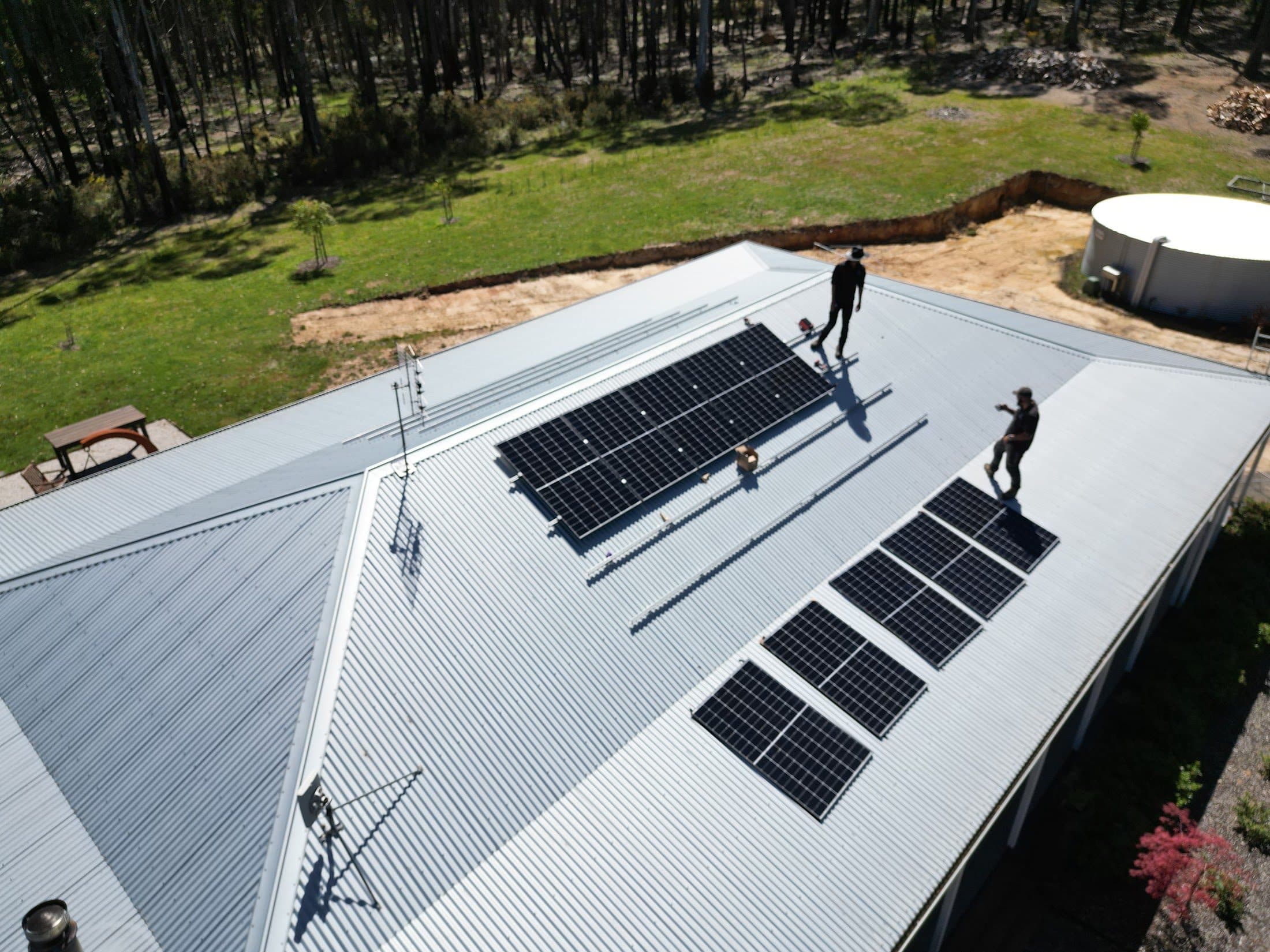
If you have solar, or are thinking about it, you may be looking for "the Victorian feed-in tariff for 2026-27". There is no such figure any more. Here is what changed, what retailers are offering instead, and why it shifts the way you should think about a solar system.
There is no minimum feed-in tariff in Victoria now
For years the Essential Services Commission set a minimum rate that retailers had to pay Victorian solar owners for every kWh they exported. That stopped after an amendment to the Electricity Industry Act. The last minimum rates, for 2024-25, applied until 30 June 2025. From 1 July 2025 there has been no regulated minimum, so the Commission has not set one for 2025-26 or for 2026-27.
The Commission had already worked out what a 2025-26 minimum would have been before the change, and those rates never took effect. They are still worth knowing, because they show where export values had got to: the Victorian Government describes the flat rate in that decision as near zero, and the time-varying option ran from 6.57 cents per kWh in the evening peak down to nothing during the day.
What the rules say now
Retailers set their own feed-in tariffs. According to the Victorian Government, they must still:
- pay you a credit for exported solar, which means a feed-in tariff cannot go below zero, and
- tell you about any change to your feed-in rate before it takes effect.
The Commission keeps an oversight role, checking that retailers' terms and conditions are fair and reasonable.
Single rate or time-varying
Retailers generally offer one of two kinds of feed-in tariff:
- Single rate: the same rate for every kWh exported, whatever the time of day.
- Time-varying: different rates at different times, usually low or nothing in the middle of the day and higher in the late afternoon and evening.
Time-varying feed-in tariffs reflect what is happening on the grid. In the middle of the day Victoria has a large amount of rooftop and large scale solar, so exported energy is worth very little. In the evening, when the sun has gone and demand is high, exported energy is worth more.
An example at the time of writing (November 2026): Flow Power's 4Free plan lists, for Victoria, up to 17 cents per kWh for the first 15 kWh exported between 5:30pm and 9:30pm, 2 cents per kWh after that in the same window, and nothing at other times. GloBird's ZEROHERO plan for battery owners also pays a bonus credit on the first 15 kWh exported in its 6pm to 9pm window. Both are built around households that can export in the evening, which in practice means households with a battery.
Why self use matters more than export
With midday export rates at or near zero on many plans, the real value of solar is the power you don't buy. Every kWh your panels produce and your house uses at the time is a kWh you do not have to buy from the grid at the retail rate. The Victorian Government's advice says the same: if you want the most from a solar system, use it yourself.
For a sense of scale, the regulated maximum rates on the Victorian Midday Power Saver run from roughly 23 to 25 cents per kWh off peak and roughly 40 to 50 cents per kWh in the 4pm to 9pm peak, depending on your distributor. Compare that with a midday export rate of a few cents or less, and the gap is obvious.
That changes how a system is best designed and used:
- Use solar while it is shining. Run hot water, the dishwasher, washing machine, dryer and pool pump in the middle of the day. Our guide to making the most of free hours covers the same habits, because they work for solar too.
- Store it for the evening. A battery lets midday solar cover the house in the evening, when grid power is most expensive, and can also let you take advantage of an evening export rate.
- Size for your use, not for export. A system designed mainly to export at midday earns very little. A system designed around what your house uses, and when, does more for you.
What to check on your own plan
- Is your feed-in tariff a single rate or time-varying, and what is it at midday?
- Has it changed recently? Retailers must tell you before a change, so check your notices.
- Is there a cap on how many kWh earn a higher evening rate?
- If you are on a free power plan, what does that plan pay for exports? It may be quite different from your old plan.
- Does a better feed-in rate come with higher usage rates or a higher supply charge? The whole bill matters, not one line of it.
Compare on your own numbers
A feed-in tariff is only one part of a plan, and the plan with the best export rate is not always the cheapest overall. Upload a recent bill to the Energy Plan Finder and it ranks every Victorian retail plan on your own usage, exports included. It takes no commission, and we get nothing from any energy retailer.