
EV charging · 1 November 2026 · 5 min read
Charging your EV from solar at home: how much do you need?
How much rooftop solar an average Victorian commute takes, why the timing of the charge matters as much as the size of the system, and what a solar-aware charger does.
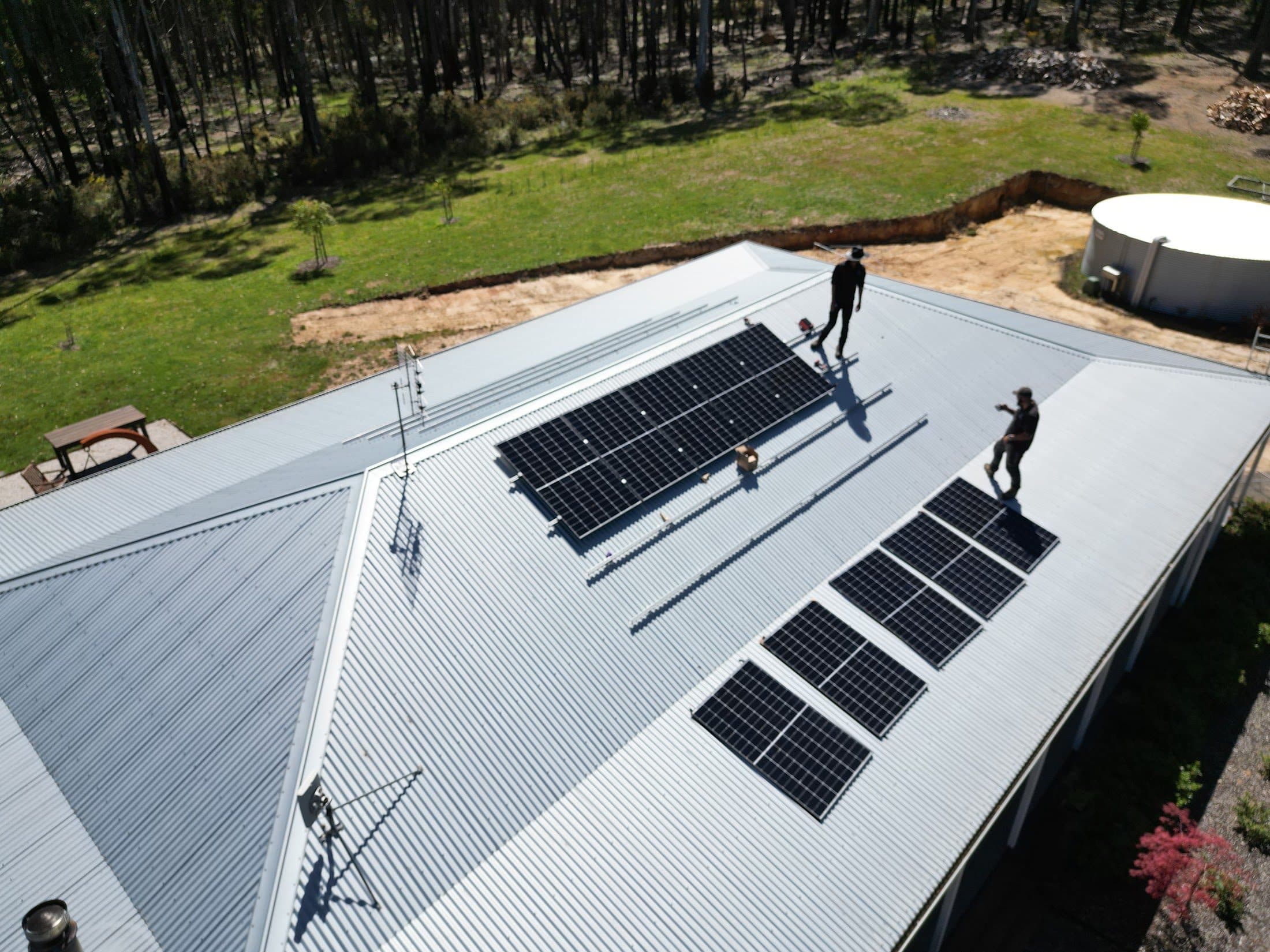
If you drive an electric car and own a roof, the obvious question is how much of your driving the sun can cover. The car needs less solar than most people expect. The harder part is having it plugged in while the sun is up.
Start with how far you really drive
The federal government's energy.gov.au puts the average Australian driver at about 33 km a day. The last Australian Bureau of Statistics Survey of Motor Vehicle Use, covering the year to June 2020, had passenger vehicles averaging about 11,100 km a year across the country, which is close to 30 km a day, and Victorian vehicles ran slightly above the national average.
So 30 to 35 km a day is a fair starting point, but your own numbers beat any average. Check the car's app over a normal fortnight and use that.
Then how much energy each kilometre takes
The Australian Government's Green Vehicle Guide lists the official laboratory energy use of every EV sold here, in watt hours per kilometre. The current Tesla Model Y versions, for example, are listed at about 157 to 162 Wh/km, which is roughly 0.16 kWh for every kilometre. Smaller hatchbacks use less, large SUVs and utes use more.
The Guide is clear that real driving differs from the lab test. Motorway speeds, cold mornings with the heater on and lots of short trips all push the figure up, and a little energy is always lost between the wall and the battery.
At 0.16 kWh per km, 33 km a day works out to a little over 5 kWh a day on paper, and somewhat more in practice. That is the number to plan around, and it is smaller than many people guess.
How much solar makes that
When the Clean Energy Regulator works out solar certificates, it gives every Victorian postcode a rating of either 1.185 or 1.382 MWh per kW of panels per year. Spread across twelve months, that is roughly 3.2 to 3.8 kWh per kW of panels per day. Long summer days sit well above that average and short winter days well below it.
Divide the car's daily need by that yield and an average commute takes roughly 1.4 to 1.7 kW of panels on the lab figure, averaged over a year, and a little more once real driving is allowed for. On a modern roof that is a handful of panels. The point is that the car is worth adding to your sums when you size a new system, so the house and the car are not fighting over the same kilowatt hours.
Daytime or overnight?
Here is the catch. Solar only charges the car if the car is plugged in while the panels are producing. A car that leaves at 7:30am and gets home at 6pm sees almost none of the weekday sun.
That matters less than it sounds, because energy.gov.au notes that a day of average driving typically uses no more than 10% of an EV's battery. You do not need to charge every day. A couple of sunny days at home can cover most of a week's commuting.
How that plays out depends on your week:
- Someone is home during the day (working from home, shift work, a second car that stays put): daytime solar charging works well and covers most driving.
- The car is away all day: weekend solar top ups do a lot of the work, and the rest can come from cheap overnight power or from a home battery that stored the day's solar.
- You are on a plan with free or very cheap midday power: from 1 October 2026 the Essential Services Commission's Midday Power Saver gives households with a smart meter who opt in free electricity from 11am to 2pm every day. The commission notes it suits households that can move their use into the middle of the day, and that it will not be the best offer for everyone.
We cover the overnight, battery and free power choices in more detail in our article on EVs, batteries and free power.
What a solar-aware charger does
A plain charger pulls whatever the car asks for, and any shortfall comes from the grid.
A solar-aware charger reads a meter clamp on your incoming supply, sees how much solar is spare after the house has taken what it needs, and charges with only that. Two examples sold in Australia:
- myenergi zappi has an ECO+ mode that aims to charge only from surplus solar that would otherwise be exported, a blended ECO mode, and a FAST mode for when you just need the car full.
- Fronius Wattpilot has an Eco mode that charges only when there is spare solar or cheap grid power, and a Next Trip mode for when you need a set charge by a set time. It can switch between single and three phase automatically to follow the surplus.
One limit to know: as myenergi points out, the EV charging standard does not allow charging below about 1.4 kW on single phase, and roughly three times that on three phase unless the charger can drop to one phase. On a dull day a strict solar-only mode may not start at all, which is why these chargers also offer a blended mode.
A short checklist
- Work out your real daily kilometres.
- Look up your car's Wh/km on the Green Vehicle Guide and add a margin for real driving.
- Add the car's daily kWh to the house when sizing panels.
- Decide when the car will realistically be plugged in.
- Choose a charger with a solar mode if the car is often home in daylight.
When you are ready to see how many panels your roof can actually carry, design your system on your own roof and add the car to the picture from the start.