
Industry · 3 November 2026 · 7 min read
Why solar companies go under, and how we are built not to
Cheap gear, rushed labour and thin margins sink solar companies, and their customers are left holding the warranty. Here is how we do it differently.
Solar looks like a simple business from the outside. Buy panels, put them on a roof, send an invoice. That simplicity is exactly why so many solar companies close. It is easy to start one, easy to win work on price, and very hard to still be standing ten years later when the warranty calls come in.
The numbers around it are not small. ASIC's figures for the 2025 to 2026 financial year show 14,152 companies entering insolvency for the first time, and construction was again the worst hit industry, with 3,472 companies entering external administration or having a controller appointed (as reported by Accountants Daily in July 2026). Solar installers live in that same trade world. Back in 2018, CHOICE reported an industry estimate that around 600,000 of the roughly 1.9 million solar systems in Australia at the time had been "orphaned", meaning the company that sold them no longer existed.
When a solar company closes, the owner does not lose the panels on the roof. They lose the people who were meant to look after them. So it is worth understanding why it happens, because the same pattern shows up again and again.
Selling cheap
Most solar companies that fail did not fail because nobody wanted solar. They failed because they won their work by being the cheapest quote in the pile.
A low price feels like a win for the customer on the day. The trouble is what the price has to leave out. Every system needs a proper design, a safe install, a grid connection application, the rebate paperwork, and someone to answer the phone when something goes wrong in year four. If the price only covers the gear and a fast install, none of that is paid for. It still has to be done, so it is done badly, or not at all.
A company that sells on price alone also has to sell a lot of systems to stay alive. The moment the volume dips, because a rebate changes or a wet winter slows installs, there is nothing in reserve.
Cheap, poor quality equipment
The second shortcut is the gear. Two panels can look identical on a roof and be very different products. The cheaper one might carry a short product warranty, come from a brand with no Australian office, or be imported by a company that will not be around long enough to honour a claim.
That cost does not show up on the day of the install. It shows up later, as a failed inverter, a panel that has dropped well below its rated output, or a battery that stops talking to its app. If the manufacturer is hard to reach, the installer pays for the call out, the diagnosis and often the replacement. Do that enough times on enough jobs and a business that looked profitable on paper is quietly losing money on every system it has ever sold.
Cheap labour, rushed jobs
The third shortcut is labour. A common model in the industry is to pay installers by the panel or by the job, not by the hours the job really needs. That rewards speed. A crew paid per panel has every reason to finish one roof and get to the next.
Rushed work does not always fail straight away. It fails slowly. A roof penetration that was not sealed properly lets water in over a few winters. A connector that was not fully clicked home works loose and starts to arc. Cables left lying on a hot roof without proper support wear through. Each of those is a call out, a repair and an unhappy customer, months or years after the job was paid for.
Margins too thin to keep the promise
All three shortcuts land in the same place. A solar sale carries a long promise. Panels come with long product and performance warranties, inverters and batteries carry years of cover, and the installer's own workmanship warranty sits on top. The money to keep those promises has to come out of the original sale.
If the margin on the job was razor thin, that money was spent the day the job was done. Then the warranty work arrives, there is nothing to pay for it, and the business either cuts corners on service or closes its doors. When it closes, the workmanship warranty usually goes with it. The manufacturer warranties on the gear still stand, but someone has to diagnose the fault, deal with the maker and do the work, and the company that was meant to do that is gone. We go through what to do in that situation in what happens to your warranty if your installer closes. If it has already happened to you, start with what to do when your solar installer has closed.
How we do it differently
We built Eucalypt to avoid every one of those traps, because a solar company is only worth choosing if it is still answering the phone when you need it.
We price the job properly. We will not always be the cheapest quote you get, and we are fine with that. Our price covers the design, a safe install, the grid connection, the rebate paperwork and the years of looking after the system that come after it. You see that price yourself when you design your system on your own roof, so there is no sales visit and no haggling.
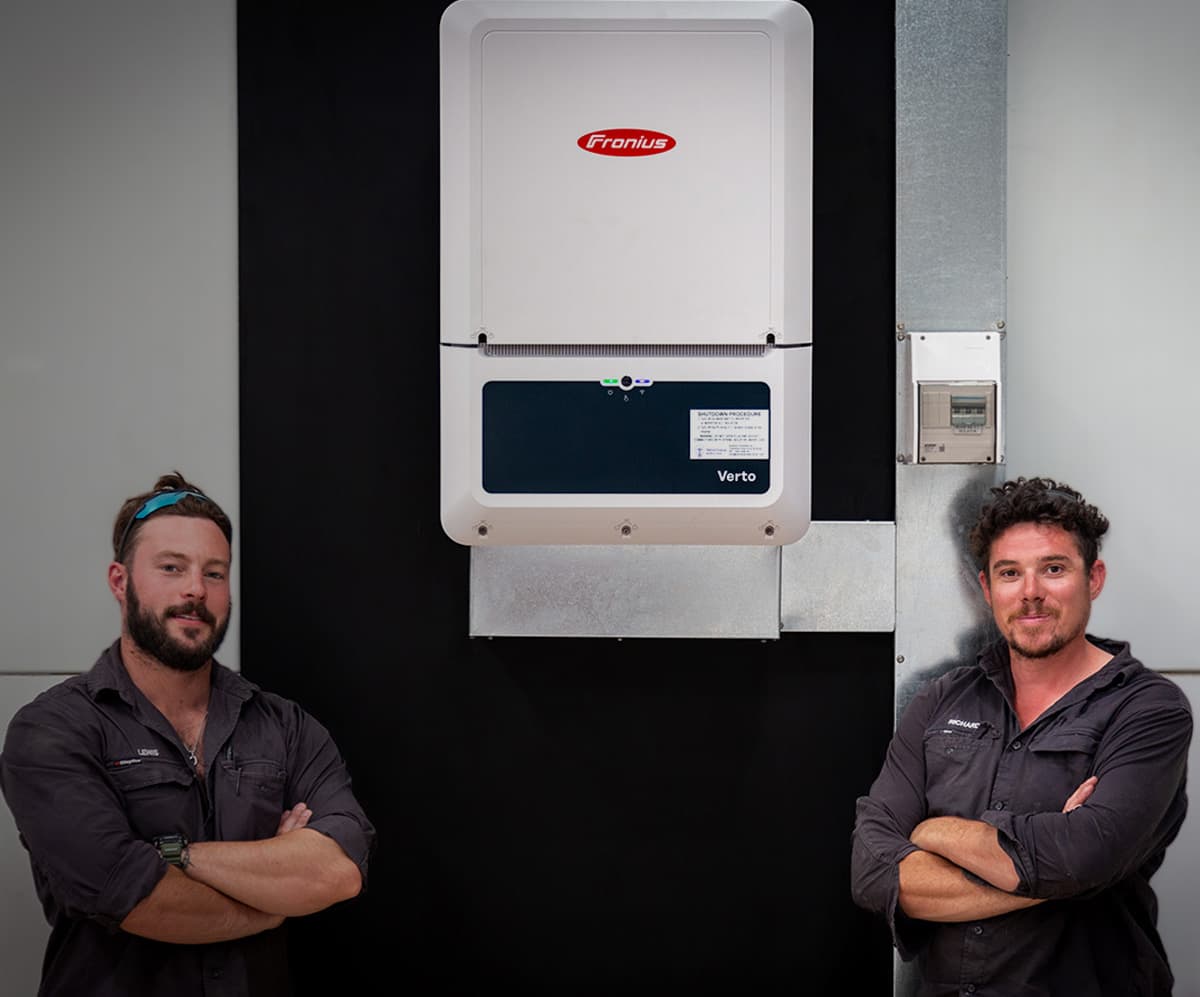
We install gear we are happy to stand behind. Our panels are Jinko, AIKO and Tongwei, and every solar system comes with all-black panels and rail. Our batteries and inverters come from brands such as Sigenergy, Sungrow, GoodWe, Fronius, Tesla and FranklinWH. We choose brands with a real presence in Australia and a warranty process that works, because when something goes wrong we are the ones making the claim. You can read why we chose each one on our brands page.
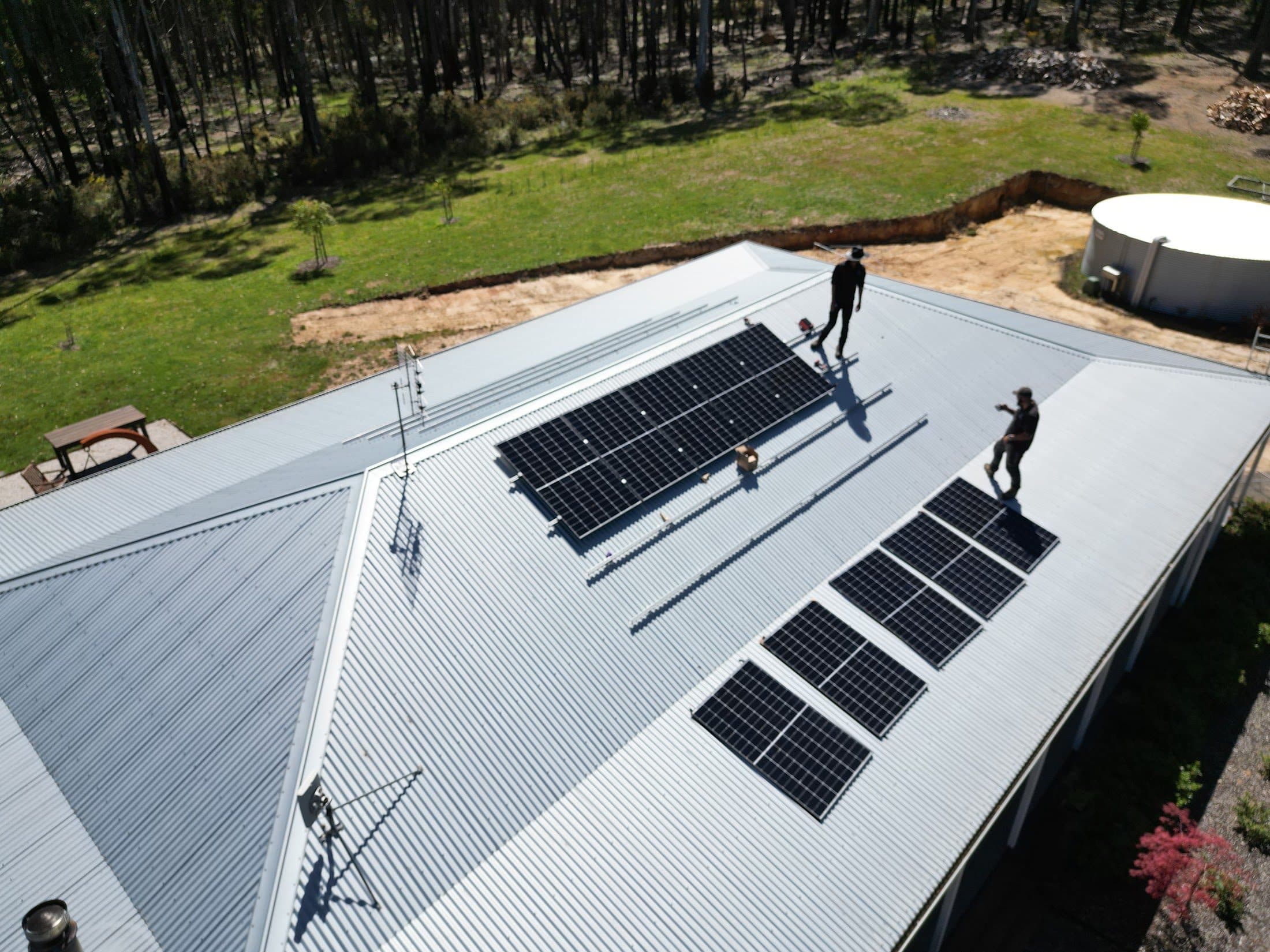
Licensed electricians, and time to do it right. Every system is installed by licensed electricians, and the price includes the time the job actually takes. A tidy, sealed, properly supported install costs a little more on the day and a lot less over the life of the system.
After sales support is part of the price, not an extra. Every system we install includes:
- Remote monitoring, so we can see how your system is running.
- Fault alerts, so a problem is often on our radar before you notice it.
- Warranty repairs on site at no cost to you. Work outside warranty is quoted first, never a surprise.
- Warranty claims handled for you, so you never have to chase a manufacturer yourself.
- The paperwork done: grid connection, STCs and rebates.
And every call and email is answered, any hour of the day.
Questions worth asking any installer
Whoever you choose, a few questions sort the solid companies from the ones running on thin air:
- How long has the business been trading under this ABN?
- Who installs the system, and are they licensed electricians?
- What does your workmanship warranty cover, for how long, and who stands behind it if something goes wrong?
- Which brands do you install, and do they have an Australian office that handles warranty claims?
- What happens after the install? Will you monitor the system, and who do I call when there is a fault?
If the answer to the last question is a shrug, the price was probably too good to be true. We cover more of this in how to check a solar company before you sign.
See it on your own roof
The best way to judge us is to see the price and the gear for yourself. Pop in your address, have a squiz at your roof from above and design your system. You will see exactly what we would install, what it costs, and what comes with it after the install is done.