
Local · 3 November 2026 · 6 min read
Solar near the ocean: salt air in Geelong, Bellarine and Surf Coast
What salt mist does to panels, rails, fixings and inverters, what the manufacturers' manuals say about distance from the sea, and what to ask before you sign.
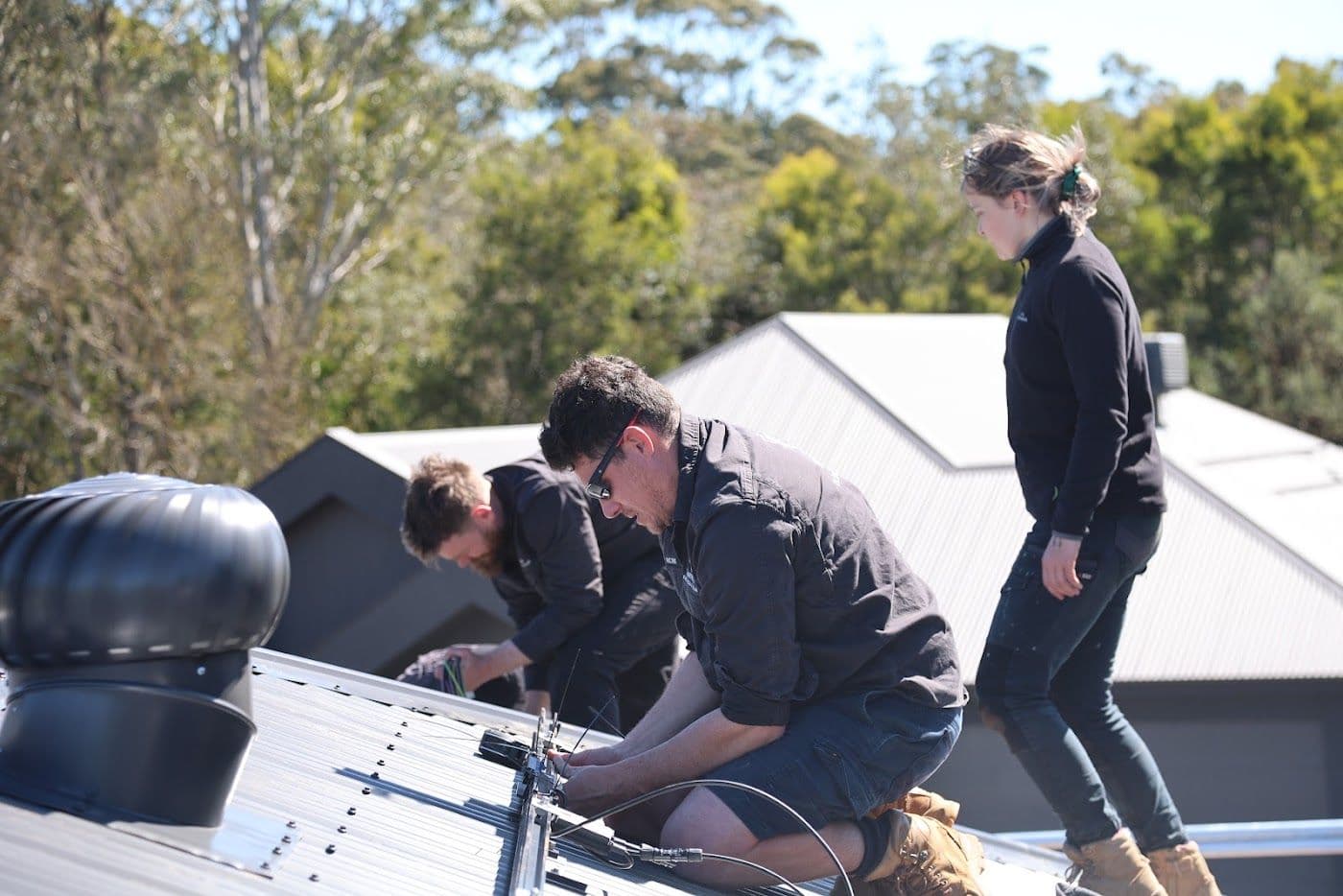
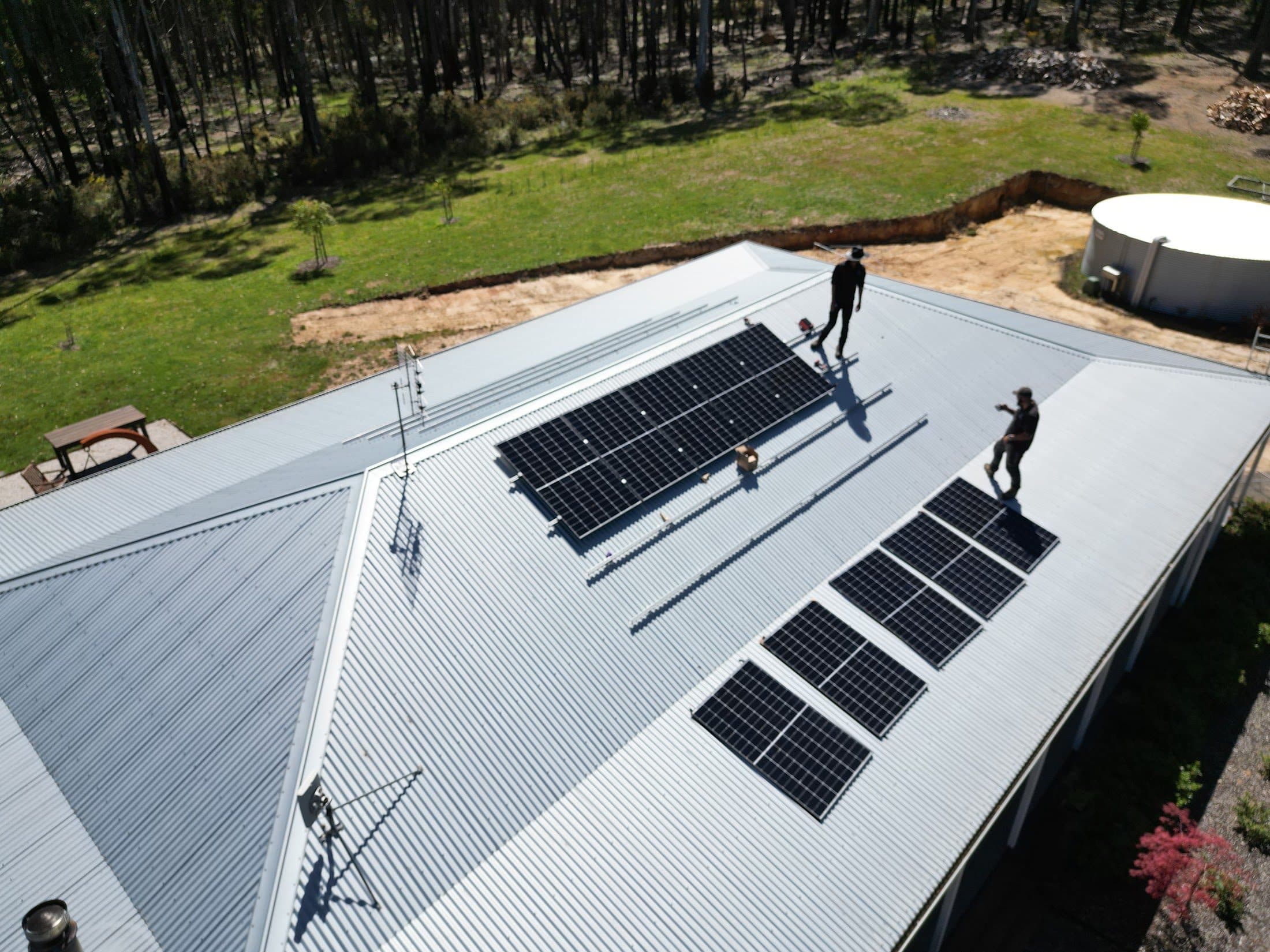
Living near the water around Geelong is a good deal, right up until you notice what the salt does to the car and the barbecue. Solar panels, rails and inverters live in that same air for twenty-plus years. Coastal solar works well, but it helps to know where salt does its damage and what the manufacturers say about it.
What salt does on a roof
Sea air carries fine droplets of salty water. When they dry, they leave salt behind, and that damp, salty film drives corrosion.
On a solar system the weak points are rarely the glass. They are the metal and the joins:
- Panel frames. These are anodised aluminium. A scratch through the coating, or a hole drilled where the manufacturer did not intend, lets corrosion start.
- Rails, clamps and roof fixings. Every place two parts meet traps moisture and salt.
- Earthing hardware. Small screws, washers and lugs are easy to overlook and quick to corrode if they are the wrong material.
- The inverter and battery. Their cases, vents and cable glands sit in the same air, often on a wall that cops the wind.
Two metals touching
When two different metals touch and a salty film bridges them, they behave a bit like a battery. One metal slowly gives itself up to protect the other. This is called galvanic corrosion, and the coast speeds it up.
The manufacturers write this into their manuals. AIKO's installation manual for its mono glass panels says that in coastal areas exposed to salt fog, corrosion can occur where the module meets the racking or at the earth connection, and that anticorrosive materials such as stainless steel or aluminium must be used in contact with the panels. It also tells installers not to drill holes in the frame or scratch the anodised coating, because both can lead to frame corrosion. Sigenergy's SigenStor installation guide makes the same point from the other side: its base is aluminium, and if it is mounted on a metal such as stainless steel that is prone to electrochemical corrosion, insulating gaskets must be fitted between the two.
The salt mist test, and how to read it
Panels can be tested to an international standard called IEC 61701, salt mist corrosion testing of photovoltaic modules. The 2011 edition's scope explains that it can be run at different severities: severity 1 is intended for panels used in a marine environment or close to the sea, while severities 3 to 6 are intended for places that swing between salty and dry air, such as where salt is spread on icy roads. Severity 2 is described as too weak for panels.
So look for IEC 61701 on the datasheet (the Jinko Tiger Neo sheet we checked lists it among its certifications), and if you live close to the water, ask which severity and edition the panel was tested to. A number on its own does not tell you much without knowing what it was testing for.
Distance from the sea is in the fine print
This is the part most people never see. Manufacturers set out how close to the sea their products can go, and installing outside those limits can put the warranty at risk.
Panels. AIKO's mono glass installation manual says its modules can be installed 50 m to 500 m from the seashore, and that within that range the frame and related components need anti-corrosion treatment. AIKO's Australian limited warranty (we read the 54-cell version) excludes damage caused by installation that does not follow its installation manual, which is why the manual matters.
Inverters and batteries. Sigenergy's SigenStor installation guides we read (a 2024 single-phase edition and a 2025 edition) say the equipment should be installed at least 500 m away from corrosion sources that may cause salt damage, and they list the seaside first. They also say to keep the equipment out of direct sunlight and rain and to install it somewhere sheltered.
Rules like these differ from brand to brand and change between editions, so your installer should check the current Australian manual for the exact products on your quote against your address.
Surf and bay are not the same
Australia's building industry already measures coastal exposure from the breaking surf. BlueScope's guidance for COLORBOND roofing, for example, recommends COLORBOND steel more than 200 m from breaking surf and COLORBOND Ultra steel between 100 and 200 m, with a separate technical bulletin that defines surf, exposed and calm marine sites.
That distinction suits this region. A home in Torquay or Jan Juc facing Bass Strait surf sits in a very different spot from one on the calmer Corio Bay or Port Phillip side of the Bellarine.
Rail makers think about this too. One rail maker's AS/NZS 1170.2 installation guide we read tells installers to check the site's atmospheric corrosivity zone under AS 4312, and says that where standard products go into high corrosivity zones such as C4 or C5, the fixing spacing has to be reduced.
Where the inverter goes
On a coastal home, the inverter's spot deserves a little thought:
- a sheltered wall, out of the prevailing wind that carries spray
- out of direct afternoon sun, which also keeps it cooler
- somewhere an electrician can reach for service
If a battery is part of the plan, the same thinking applies, along with the Australian battery standard covered in where a home battery can go.
A gentle rinse helps
Rain does most of the cleaning. Where it does not reach, salt can build up. AIKO's manual recommends cleaning with a sponge and clean water, preferably soft water, and never detergents containing acid or alkali or rough tools, ideally in the early morning or late afternoon when the panels are cooler. Please do not climb onto the roof yourself. If you can reach the panels safely from the ground with a hose, a light rinse is fine. Otherwise, leave it to someone with the right gear.
Planning a coastal system
None of this means solar near the sea is a bad idea. It means the products and the fixings should be checked against your address, not just your roof. Every system we install includes remote monitoring and fault alerts, so a problem shows up before it costs you a season, and if something covered fails, we handle the warranty claim and fix it on site at no cost.
Have a squiz at what fits on your own roof, and if you live close to the water, mention it when we talk so the coastal limits are checked before anything is ordered.