

Solar · 1 November 2026 · 5 min read
Design your own solar system on your own roof
How a solar system is really sized, from roof faces and shading to inverter size and Victorian export limits, and how our designer lays panels out on the aerial photo of your house.
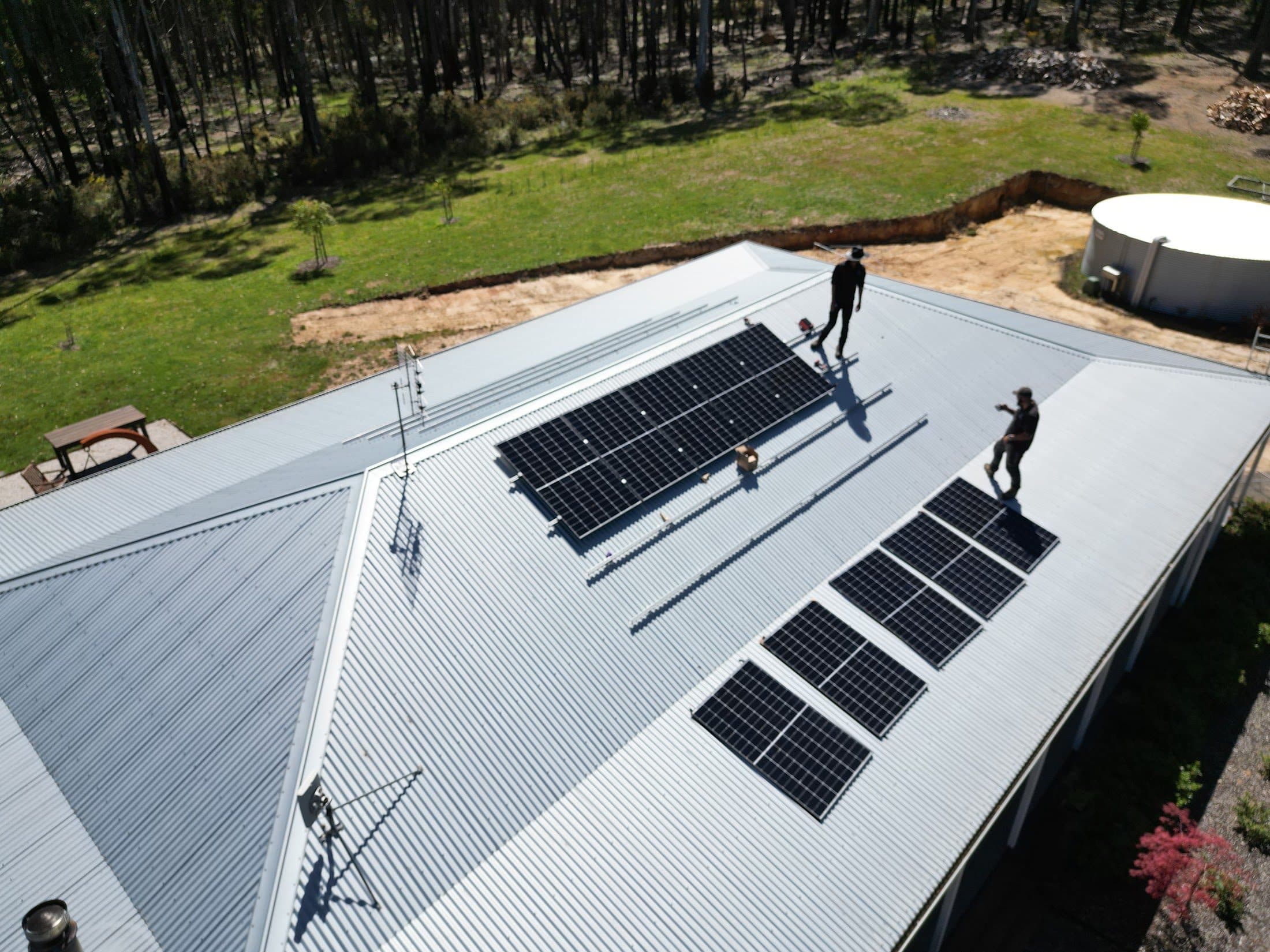
Most solar quotes start with someone else deciding how big your system should be. You can do a good part of that thinking yourself, as long as you know what actually limits a system. It comes down to four things: the roof, the shade, the inverter and the network.
1. Which way your roof faces
In Victoria a north facing roof gets the most sun across the day and the year. East and west faces still work well. They make less in total than north, but they spread the production into the morning and the afternoon, which can suit a household that uses most of its power before work and after school. South facing roof is usually the last place to put panels.
Plenty of good systems use two or three faces. A hip roof with an east and a west side, for example, can carry a sensible system even with no north face at all.
2. Shade
Shade costs more than people expect. A tree, a chimney, a second storey next door or a TV antenna can take a bite out of a panel's output for part of every day, and in winter, when the sun is low, the shadows are long.
The practical rule: put panels where the sun reaches through the middle of the day, and leave shaded corners empty.
3. How many panels fit
Roof area is not the same as usable area. Panels have to keep clear of roof edges, ridges, hips and valleys, and they have to work around vents, skylights, flues and anything else on the roof. Rows are usually laid square to the gutter so the system looks tidy from the street.
That is why two roofs of the same size can carry very different numbers of panels.
4. The inverter
The inverter turns the panels' DC power into AC for the house. The panels and the inverter do not have to match exactly. Our designer picks the smallest inverter that suits the panels, allowing up to a third more panel than the inverter's rating, and lets you choose a bigger one if you want room to grow.
There are also network limits on inverter size for a standard home connection. CitiPower and Powercor's connection policy sets a basic connection at no more than 10 kW of inverter on single phase or 30 kW on three phase, and United Energy describes a similar 10 kVA single phase limit for its standard offer. Bigger systems are possible but go through a separate process.
5. Export limits
Before a system goes in, your electricity network pre-approves how much it may send back to the grid. That figure depends on how much room your local street has, so it varies from house to house.
- United Energy's factsheet says it currently sets a maximum of 5 kW on exports.
- Jemena's rules allow 5 kW per phase when the system is compliant and connected, and drop that to 0.5 kW in total if the inverter loses its internet connection.
- Powercor now offers flexible exports, where the limit moves with network conditions, to customers who would otherwise get a zero export limit. It says flexible customers can export up to their inverter's capacity, to a maximum of 10 kW, most of the time.
- New installations since October 2024 need an inverter that can talk to the network over the internet, the CSIP-AUS standard, as part of Victoria's emergency backstop rules.
Powercor's connection policy for 2026 to 2031 also proposes lowering its maximum fixed export limit to 1.5 kW per phase while it rolls out flexible exports, so expect these rules to keep moving.
An export limit does not cap the number of panels. It caps what leaves the meter. Power used in the house, sent to a battery or into an EV is not affected, which is one reason batteries and solar-aware EV chargers pair well with a limited connection.
How our designer does it
Our online solar designer is built around those same steps, done on the aerial photo of your own house.
- Put your address in. We find the roof on the current aerial photo and check whether we can read it. If the roof data does not cover your address, we offer to check it by hand instead.
- The roof is read. The tool reads the roof lines off the photo and lays panels out on the faces worth using.
- Move things around. Drag panels, add some, take some away. The panel count, system size and expected yearly generation update as you go, and the inverter is sized to suit.
- Add a battery if you want one, and size it how you like.
- Get a real price. Tell us the roof type, the number of storeys and whether the house is single or three phase, add your contact details, and the price appears: one figure, GST included, worked out from our own costs rather than a range, with the certificates and any rebate shown as separate lines.
What the photo cannot tell us
An aerial photo is a very good start, not the final word. It shows the house on the day it was taken, a tree may have grown since, and it cannot show the switchboard, the meter or the inside of the roof. That is why a licensed installer visits before anything is signed. The inspection is free and carries no obligation, and if it changes the design or the price, we tell you what changed and why before you decide. Our how it works page walks through every step from the design to switch on.
Try it on your house
The best way to understand your own roof is to look at it with panels on it. Put your address in and start designing, move the panels until it looks right, and see the price for exactly that layout.