
Brands · 1 November 2026 · 5 min read
GoodWe hybrid inverters and batteries, a plain guide
How GoodWe's ESA all-in-one and Lynx batteries work, what the warranties cover, how the SEMS app fits in, and how to tell single phase from three phase.
GoodWe makes inverters and home batteries, and it is one of the names you are likely to see when you start pricing solar with storage. This guide covers what GoodWe sells for homes, what the warranty paperwork actually says, and the questions worth asking before you choose a system.
Who GoodWe is
GoodWe Technologies is a Chinese manufacturer based in Suzhou. In Australia it trades through GoodWe Australia Pty Ltd, which its Australian warranty names as the importer, with an office in Rowville, in Melbourne's south east. For a Victorian homeowner that is a handy detail: the company standing behind the warranty here has a local address and a local phone line.
The hybrid inverter, in one paragraph
An ordinary solar inverter turns the power from your panels into power your home can use. A hybrid inverter does that and also manages a battery: charging it from spare solar during the day, and running the house from it at night or during a blackout. If you want a battery now or later, a hybrid inverter is usually the starting point.
The ESA all-in-one
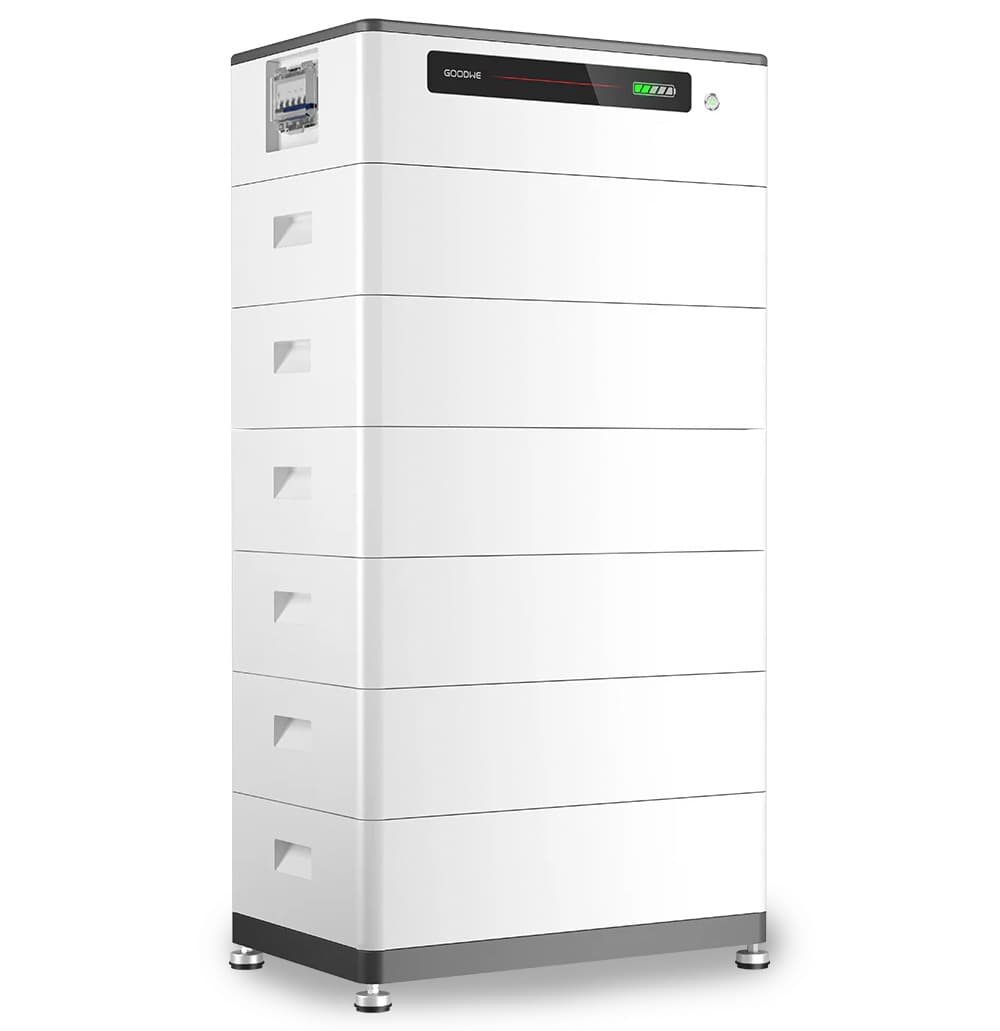
GoodWe's newer home system is the ESA, an all-in-one design where the inverter and battery modules stack together into a single neat unit on the wall or floor.
- Single phase ESA. GoodWe's Australian warranty lists inverter models from 3 kW to 10 kW, paired with battery modules of 5 kWh and 8 kWh usable energy. GoodWe says modules stack to up to 48 kWh in one tower.
- Three phase ESA. A separate three phase range runs from 5 kW to 30 kW. GoodWe's Australian product page lists battery modules of 5, 6, 8 and 9 kWh, with up to 12 modules for as much as 108 kWh.
- Backup. GoodWe describes the single phase ESA as able to back up the whole home on a 63 A supply without extra hardware, switching over fast enough that most appliances will not notice. How much of your home stays on in a blackout still depends on how your switchboard is wired and how big the inverter is.
GoodWe says the ESA is approved by the Clean Energy Council, which matters because the federal Cheaper Home Batteries Program only applies to batteries on the approved list.
The Lynx batteries
Before the ESA, GoodWe's batteries were sold as separate units under the Lynx name, designed to pair with GoodWe's own hybrid inverters. The Lynx Home F series is a high voltage battery that stacks in modules. Its Australian warranty gives 10 years on the product and 10 years on performance, with the battery guaranteed to keep at least 70% of its usable energy over that time, or to deliver a set total amount of energy, whichever comes first.
You will still see Lynx batteries on quotes, often paired with a GoodWe hybrid inverter where the inverter and battery are chosen as separate pieces rather than one stacked unit.
What the ESA warranty covers
GoodWe's Australian warranty for the single phase ESA sets out:
- 10 years on the battery modules and the inverter.
- 2 years on the Wi-Fi, LAN or 4G communication kit and on the optional smart meters.
- A performance promise that the battery keeps 70% of its usable energy within 10 years, or reaches a set lifetime throughput of energy, whichever comes first. The performance warranty covers the battery cells; the other parts sit under the product warranty.
There are a few conditions homeowners should know about. The warranty assumes roughly one full charge and discharge a day. Faults need to be reported promptly, and GoodWe asks that claims go to the installer or distributor first. That is the normal path with most brands, and it is why it helps to have an installer who handles the claim for you rather than leaving you to sort it out.
The SEMS app
GoodWe's monitoring platform is called SEMS. Once the system is online, you can see on your phone how much the panels are making, how full the battery is, and how much you are drawing from or sending to the grid. Your installer uses the same platform to check the system remotely, which can turn a fault that would have gone unnoticed for weeks into a quick fix. Keeping the inverter connected to your Wi-Fi is worth doing for that reason alone.
Single phase or three phase?
This is the question that decides which GoodWe range suits you, and it is decided by your house, not by preference.
- Single phase is what most Victorian homes have. You will usually see one main switch for the supply on your switchboard.
- Three phase homes have a three-pole main switch, and are more common on larger homes, farms and properties with big pumps, workshops or ducted heating and cooling.
A three phase home can sometimes use a single phase inverter, but a three phase inverter spreads the solar and battery across all three phases, which is often the better fit for a bigger load. Your local network also sets limits on how much a single phase system can export, which can change the choice. A photo of your switchboard is usually enough for an installer to tell you which you have.
Questions worth asking about any GoodWe quote
- Is it an ESA all-in-one, or a hybrid inverter with separate Lynx batteries?
- Is the inverter single phase or three phase, and does that match the home?
- How much usable battery storage is included, and can more modules be added later?
- Which circuits will stay on during a blackout?
- Will the system be registered and connected to SEMS before the installer leaves?
If you would like to see how a GoodWe system or any other option would look on your place, you can design your system on your own roof from an aerial photo and see a real installed price straight away.