
Brands · 7 November 2026 · 5 min read
Sungrow inverters and batteries explained for Victorian homes
How Sungrow's SG solar inverters, SH hybrids and SBR and SBH batteries fit together, what backup each gives you, and what the warranties really say.
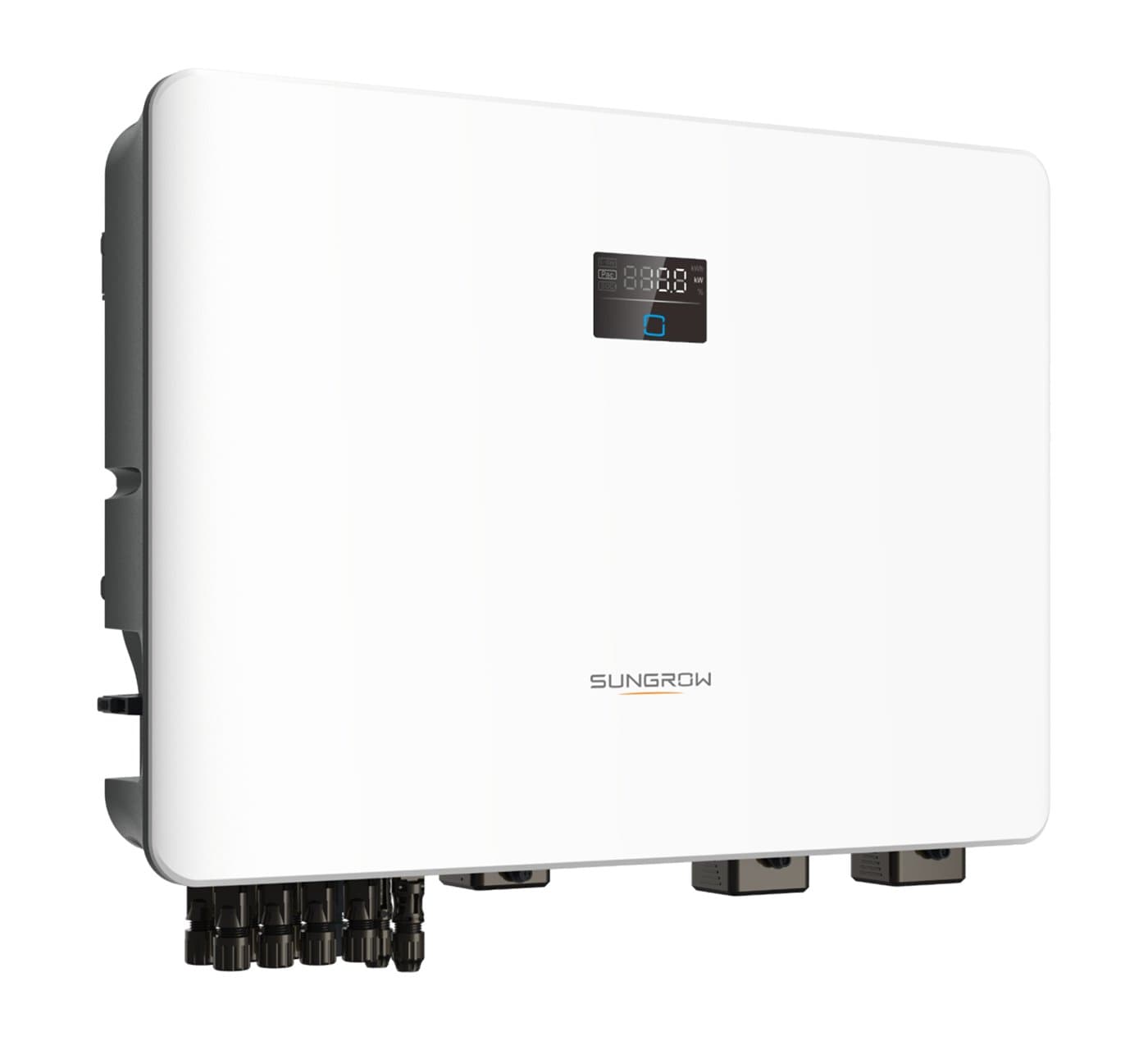
Sungrow is one of the most common inverter names on Australian roofs. The model codes look like alphabet soup at first, but once you know what the letters mean, a Sungrow quote is easy to read. Here is the plain version.
Who Sungrow is in Australia
Sungrow is a large Chinese maker of solar inverters and energy storage. It opened its first Australian office in Sydney in 2012, and its warranties here are issued by Sungrow Australia Group Pty Ltd. Sungrow says it has passed 500,000 installations across Australia.
In the SolarQuotes Installer's Choice survey published in July 2026, Sungrow was the most popular inverter brand, picked by 27% of the 125 installers who answered.
SG or SH: the first two letters matter
Sungrow sells two kinds of home inverter, and the first two letters tell you which one you are looking at.
- SG inverters are for solar on its own. They have no battery port, so adding a battery later means a second inverter or a swap.
- SH inverters are hybrids. They run your panels and a battery from one box, so a battery can be added now or later without changing the inverter.
If a battery is likely in the next few years, an SH hybrid is usually the sensible starting point.
The single phase hybrids (SH-RS)
Most Victorian homes are single phase, and for them Sungrow's hybrid is the SH-RS range.
- SH5.0RS and SH6.0RS. The smaller pair. In a blackout they run a backup circuit of up to 6 kW, so you choose which circuits stay on, such as the fridge, lights and a few power points.
- SH8.0RS and SH10RS. The larger pair. Sungrow's datasheet lists four solar inputs (MPPTs), room for solar up to twice the inverter's rating, and a 63 A backup output, which Sungrow describes as whole home backup.
Both pairs switch to backup in under 10 milliseconds, according to Sungrow's datasheets, so most appliances will not notice the grid dropping out. The SH8.0RS and SH10RS also list arc fault protection, which watches the solar wiring for the kind of fault that can start a fire.
The three phase hybrids (SH-T)
Larger homes, farms and properties with big pumps or ducted heating often have three phase power. Sungrow's SH-T range is built for them, from SH5T up to SH25T. Its datasheet lists a built-in 63 A bypass for whole home backup and the same switchover of under 10 milliseconds. Not sure which supply you have? Our guide to whether a battery will run in a blackout explains how to tell from the switchboard.
The batteries: SBR and SBH
Sungrow's home batteries are stacks of lithium iron phosphate (LFP) modules that sit on the floor.
- SBR pairs with the single phase SH-RS. Each module holds 3.2 kWh, and a stack takes 2 to 8 modules, from 6.4 kWh to 25.6 kWh.
- SBH pairs with the three phase SH-T. Each module holds 5 kWh, a stack takes 3 to 8 modules for 15 to 40 kWh, and Sungrow says up to four stacks can run side by side.
Both are rated IP55 for indoors or outside. Our article on where a home battery can go covers placement rules.
What the warranties actually say
Inverters. Sungrow's Australian inverter warranty covers the SG-RS, SH-RS and SH-T models for 10 years from installation, but no more than 11 years from the date the inverter was made, whichever comes first. Accessories such as communication modules and smart meters carry 1 year. Longer cover can be bought before the standard warranty ends.
Batteries. Sungrow's HV battery warranty (version 8.0, for batteries installed from 1 October 2024) covers the SBR and SBH for 10 years from installation, or 10 years and 6 months from manufacture, whichever comes first. On performance, Sungrow promises the battery keeps at least 70% of its starting capacity over those 10 years.
There are conditions worth knowing:
- Unlimited cycles only for normal home use. Daily self consumption and backup have no cycle limit. Any other use, or a mix that includes one, is capped by a total energy figure. For the largest SBR stack, the SBR256, that figure is 71.68 MWh.
- It must be monitored in iSolarCloud. The warranty excludes a battery that is not monitored there. Sungrow also needs the battery's data and log history over the internet, and if that data is incomplete, it will honour the warranty for at least four years from installation rather than the full ten.
- It goes to the end user. Sungrow's battery warranty is given to the person the battery was supplied to and is not otherwise transferable. Worth knowing if you might sell the house.
- Labour has limits. For a battery fault, Sungrow supplies the replacement and a set service rebate towards labour, and its warranty says travel costs are not covered.
The iSolarCloud app
Sungrow's monitoring app is iSolarCloud. It shows what the panels are making, how full the battery is and what is flowing to and from the grid. Because the battery warranty depends on it, keeping the system on Wi-Fi is not optional.
Where Sungrow fits
Sungrow sits in the balanced range of our designer. It suits most single and three phase homes, whether you want solar now and a battery later, or both at once. The full lineup, with datasheet tables, is on our Sungrow brand page.
Every Sungrow system we install comes with remote monitoring and fault alerts, so if something trips we usually know before you do. We register the warranty, keep the system online, lodge any warranty claim with Sungrow for you and carry out warranty repairs on site at no cost to you. Work outside warranty is quoted first.
Questions worth asking about a Sungrow quote
- Is the inverter an SG or an SH, and does that match your battery plans?
- Is it single phase SH-RS or three phase SH-T, and does that match the home?
- How many battery modules are included, and how much room is left to add more?
- Will the backup run chosen circuits or the whole home?
- Is the battery on the Clean Energy Council approved list at the time of the quote? That is a condition of the federal Cheaper Home Batteries Program.
Want to see a Sungrow system on your own place? Have a squiz at your roof in our designer, pick Sungrow as the inverter and you will get an installed price on the spot.